
Belinda Bradford: Born to Explore
From an expat compound guarded by machine guns in the Philippines, to boardrooms in Hong Kong, Sydney, New York and Los Angeles. Belinda Bradford's life built on fearlessness, reinvention and the conviction that real human connection is worth more than any algorithm.

A quick note before you scroll through the photos and the article below: Belinda Bradford deserves to be featured in Entrepreneur, Inc Magazine and Harvard Business Review, no question. But that's not what you'll find here. These images are not polished, corporate Belinda. They're the real, true Bel, surrounded by other wonderful women and men, being silly, and chasing her 3 great loves: adventure, authentic human connection and the ocean. And just like the photos, her story is real, candid, and honest. As she is.
A Childhood Written in Extraordinary Ink
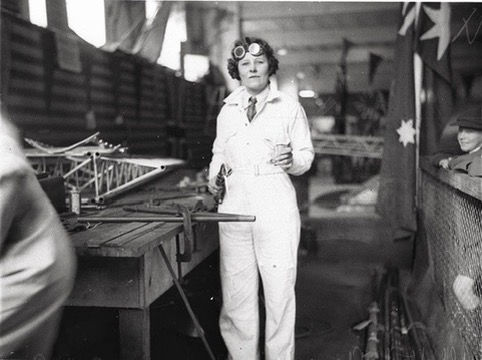
Adventure was in Belinda Bradford’s DNA long before she understood it. Her great-aunt, May Bradford, was one of Australia’s first female aviators: the first woman in the country to hold a commercial pilot’s licence alongside a full aircraft engineer’s qualification. She funded her own flying lessons by selling gems, built and repaired her own aircraft, ran her own air charter business and competed against the best pilots in the country in the 1936 Adelaide Centenary Air Race. A woman who did not wait for permission. Belinda never knew much about her story growing up. It was not talked about. May Bradford did not fit the mould of her time. Which is perhaps why the two of them would have understood each other perfectly, had they ever met.
During her teenage years, Belinda’s father took on a contract to work with a French-owned construction company operating a joint venture with the Australian government, focused on building roads into the jungle in a remote region of the southern Philippine island of Mindanao. It was a place of striking isolation, natural beauty and real danger.
While her parents were based there, Belinda and her brother stayed behind in Australia for school. Not just any school. The Australian Department of Foreign Affairs recommended a boarding school attended by the daughters of the country’s political elite. When the Bradford siblings travelled between countries, they were chauffeured in their school uniforms by Foreign Affairs staff in a limousine from the school gates. At the airport, they moved through a fast-track diplomatic channel. In the Philippines, they were met on the tarmac and escorted by Australian embassy staff to meet their parents.

On school holidays in the Philippines, her father would load the family into company jeeps and head into the jungle with military escorts, taking Belinda and her brother to remote villages where foreigners were rarely seen. Belinda was fourteen, fifteen at most, with blonde hair to her waist. In villages colonised by Spanish missionaries many years earlier, she was treated with a mixture of astonishment and reverence. She learned how to bargain at markets, how to read people, how to move through communities very different from her own, and how to stay composed when everything around her was unfamiliar.
“He showed me how to bargain, what to say, how to talk to strangers. To appreciate the raw excitement that comes from stepping into experiences that feel uncomfortable at first, but leave you in awe, with memories that last a lifetime. He was extraordinary at that sort of thing. Pretty fearless.”
— Belinda Bradford
Her grandfather on her father’s side was also a force of nature: a big, commanding man who led the workers’ union for one of Australia’s largest open-cut mines, at a time when union leadership carried real political weight. He could walk onto a stage unrehearsed and hold the attention of an entire workforce with nothing but his voice and his presence. He was also tough, harsh at times, and dominated his family with the kind of hard love that sometimes turned volatile. It was not a healthy environment, and it left marks on Belinda’s father that he would carry into adulthood.
He buried much of that anguish in sport, becoming a champion boxer and motorcycle speedway racer. It is no surprise, then, that he trained both Belinda and her brother to race motorcycles. At many of the events her brother competed in, girls were simply not encouraged to race. Her father was not a rule follower, however. He entered her as a boy, tucked her waist-length hair into her helmet in the car before the start, waited for her to finish in the top half of the field, then had her pull the helmet off in the middle of the race pits so every competitor she had just beaten could see who had done it. Both of them thought it was funny at the time. Looking back, she recognises it as the earliest rehearsal for something she would spend the rest of her life doing: turning up in rooms she was not expected to be in, and delivering.

Her mother’s story was its own kind of survival. She lost her own mother at twelve and was sent by her father to boarding school in Brisbane, effectively raised by a family friend who lived across the country after her father remarried and started a new life. She buried her grief in music, eventually becoming an accomplished classical pianist. She learned, above everything else, that life was something you had to figure out and endure on your own.
“You wonder why I’m so determined and independent. Then you look at where I came from and it becomes pretty clear.”
— Belinda Bradford
The School That Broke Everything Open
Being placed in an elite conservative boarding school in Sydney at fourteen should have felt like a fortunate break. For Belinda, the first year was brutal. She was bullied, felt isolated and alone in an environment she was not equipped to deal with at such a young age. She hated the structure, struggled to focus, and could not make sense of how to study. The school held meetings about whether she should stay, given the difficulties she was experiencing.
Looking back, she can see what was actually happening. The school was dismantling every belief she had absorbed in her unpredictable home life. It separated her from the chaos she had grown used to, forcing her to adapt to something completely different and to see the world through a steadier lens. The discipline that felt so abrasive in the first year became her anchor. For perhaps the first time in her life, she began to feel safe.
The school’s values were clear: education opens doors, hard work is required to achieve anything of real value, and no one gets to tell you how much you can achieve or how big a life you can live. These ideas became the foundation of everything Belinda built later. Having grown up with a father who did not understand the value of women, she was now surrounded by women who were encouraged to lead and succeed without apology.
“I didn’t see it coming. There was no grand plan. I was just dropped into an environment that took away all the foundations I’d been raised to believe were real. Looking back, I was incredibly lucky to end up where I did.”
— Belinda Bradford
Boarding school also gave Belinda the friendships that became her foundation. Many of her closest friends today are women she met back then. These friendships, now decades old, have lasted through marriages, divorces, financial wins and losses, and adventures across the globe. She credits those relationships for her deep belief in the power of real human connection.
“That’s where I first understood what real connection actually feels like. Not something that only motivates you. Something that holds you, grounds you. It’s that ‘constant’ you know you can rely on”
— Belinda Bradford
Walking Into Rooms Nobody Had Invited Her Into
When Belinda finished school, she went looking for money fast. Her family situation had made one thing clear: independence required income, and income required action.
Her first move was characteristic. She was seventeen, interested in fashion, and so she walked unannounced into the Sydney offices of Trent Nathan, one of Australia’s most celebrated fashion designers of the era, and announced she wanted a job. No appointment, no relevant experience, no plan. She sat in the lobby and waited. The receptionist eventually produced the Managing Director. He was kind. He told her she needed to get some experience first, to get clear on what she had to offer, because showing up and just wanting something was not enough. She took the feedback, found a different door and walked through it.
She landed a management cadetship at Grace Brothers, the Nordstrom’s of Australia at the time. Within ten months, she had applied for a role in the head office buying team without telling anyone at the store. A jump so unusual for a suburban trainee that when she got the job, the department store used her as a case study in ambition for every other cadet in the program.
She became the first woman ever hired into the male-dominated menswear buying team, and then the youngest directional fashion buyer for menswear, all before she was twenty-three. In buying meetings with thirty senior male professionals, she absorbed a discipline that has stayed with her ever since.
Know your numbers, own your numbers, never be surprised by your numbers. If you got a figure wrong, the buying director shredded you in front of the room. If you were late to the meeting, same thing. Credibility is not built once. It is defended every single week. Proving your worth is not about a single moment of brilliance. It is about listening, observing, learning, and turning that knowledge into your craft, day by day.
“Success isn’t an accident. It’s not going to happen ‘TO’ you. You have to create it yourself, by understanding exactly what you’re doing in the role you’re in and doing it well.”
— Belinda Bradford
She dropped out of her part-time economics degree. The academic environment did not suit the way her brain worked. She learned by doing, by working through numbers at a table, by being in a room where results were demanded, and excuses were not welcome.
She took a year in Europe at twenty-one, came back, worked briefly in advertising for Playboy Magazine Australia, and produced what she believes was the country’s first male model fashion road show, touring it across Australia’s major shopping centres. She was twenty-four by this stage, with no roadmap and no shortage of nerve. She then moved into a buying role at a duty-free company that sent her to lead their new Honolulu operation. All the time, she was layering experiences, refining her skills, building her capacity to create value.
Five Years in Hawaii, One Lesson About Power
The duty-free company sent Belinda to Honolulu to lead their Hawaiian operation. She quit and stayed. She loved the ocean. This is where she learned to surf and found a particular kind of freedom, a place that felt genuinely removed from everything she had grown up with. She became marketing director for a Honolulu radio station and threw herself into the rock and roll world of the early nineties. Pearl Jam, the Red Hot Chili Peppers, the beginnings of Nirvana. She worked on tours when the bands came through the state, built partnerships with local businesses, and learned what it meant to market a culture rather than a product.
Then came the moment that sharpened something in her permanently. Her radio station was struggling financially. Belinda drew on her background in fashion licensing, put together a syndication concept and pitched it to one of Australia’s biggest radio networks. She flew to Sydney, walked in with a full presentation, made the case, and flew home to Hawaii. She found out later that within an hour of her leaving the meeting room, the CEO had emailed his team internally with her concept as their new summer campaign. Through her business network she found out what they had done, flew back to Sydney, secured a pro bono IP lawyer, and sued the Australian radio station alongside the Hawaiian network’s management. They won. The story ran across Sydney newspapers.
In the settlement negotiations, the Australian radio station CEO refused to proceed if she was in the room. Her senior counsel told her it was unfair and inappropriate, but the settlement was finalised without her nonetheless. The network simply could not accept that a woman in her late twenties had outmanoeuvred them.
“That was the first time I truly saw it: being smart and female wasn’t always going to make things easy or even be accepted. But it fired up my ballsiness. I didn’t really understand my power at the time, so I went along with what they wanted. But the experience prepared me for what came next, and I’ve had no fear walking into rooms since.”
— Belinda Bradford
Hawaii was also where the weight of Belinda’s upbringing caught up with her. Years of living at full speed, of an unprocessed childhood, of burying difficulty in the pace and noise of the fashion and music industries, eventually required her attention. She experienced a breakdown serious enough to require professional help and hospitalisation. She speaks about it plainly: it happened, she got help, she processed more in that period than she had in years. When she returned to Australia, she carried something new: a commitment to self-understanding she has continued to build ever since. She began to develop an arsenal of tools from the best professionals in psychology, psychotherapy, neurology and business coaching that she draws on to this day.
Back in Sydney, she used her industry experience to secure a senior buying management role for an airline preparing for its public listing. The financial rigour she had absorbed as a fashion buyer came back in full force, this time at the scale of a billion-dollar international carrier.
When $55 Million Turned to Zero, and the Day the World Stopped
Time Inc. poached Belinda from an aviation conference in South Africa and brought her to Hong Kong as Global Vice President of Operations for a multimedia subsidiary. She was in the middle of something genuinely historic: the AOL-Time Warner merger, the dawn of digital content, the moment the entire entertainment industry had to decide what it was.
Most of the old guard refused to move. Belinda could see exactly where things were going. When Time Inc. announced it would sell the subsidiary, she left and built the idea herself.
She founded Creative Airspace, the first company to offer syndicated digital content for in-flight entertainment systems worldwide. She pitched to a venture capital firm in Hong Kong with an opening slide that stopped the room:
There is a market the size of China flying in a contained environment on any given day of the year, currently without access to internet content and e-commerce; we are going to change that…
She secured US$1 million in funding on the first pitch. She signed the first syndicated global content deal with MSNBC and a growing roster of digital providers. Within twelve months, the company reached a US$55 million valuation.
“I had never raised capital before. Never run a company. But I knew my numbers and my industry inside out. I knew how to build a compelling case and present it in a boardroom. I was determined, I had a clear vision, and I could articulate it. That’s why I got the money.”
— Belinda Bradford
On September 11, 2001, Belinda was on a United Airlines flight from Hong Kong to Los Angeles, following her usual schedule of client meetings in the USA. She had flown this route many times. But on this day, something felt wrong. The ocean was on the wrong side of the aircraft. The crew had battened down the cabin far earlier than usual. When two F-18s escorted the plane onto the tarmac in Honolulu instead of LA, she knew something serious had happened.
At the airport and at the hotel, no one would tell her what was going on. Staff had been told to say nothing. She got to her room, turned on the television, and watched the towers fall. America had no plan. The airports were closed. Nobody knew if more attacks were coming. She called her mother in the middle of the Australian night to say she was alive. Her $55 million business had gone to zero overnight.
She stayed in Honolulu for five days. Every morning she hired a surf coach and went to a quiet break on the north side of the island, away from the noise, because she knew she could not process what had happened by watching the news around the clock. The ocean had always been where she found clarity. She then flew into Los Angeles, shut down her LA apartment, and flew back to Hong Kong. She walked into the office and told her team it was over.
She shut Creative Airspace down, paid everyone what they were owed, handed control back to the investors who held majority equity, shipped her belongings, and got on a plane to Australia.
“Closing Creative Airspace wasn’t easy. All I could think was, what if the bomb had gone off and this was all I had? I was just turning forty, and I had started to ask myself, what am I doing this for? I could have held on and tried to rebuild. But I knew the aviation industry would take years to recover after 9/11, and the investors we had partnered with had begun to show all the qualities you hope you never see in a partner: interfering in the business, delaying promised funding, demanding excessive reporting that pulled my focus away from actually building the company. When I look back now, walking away was the right call.”
— Belinda Bradford
Byron Bay, Integrity, and Everything She Learned the Hard Way
After 9/11, Belinda spent six months in Byron Bay, surfing and recalibrating. Then Matsushita, Panasonic’s avionics subsidiary, tracked her down. They wanted her to move to Los Angeles. She refused. They agreed she could commute every month from Australia instead. For two years, she flew in and out of LA, hired to build a digital content delivery model for in-flight systems, the same model she had developed at Creative Airspace. She knew from the start that a corporation of that size could not execute it. They had brought a startup brain in to solve a startup problem inside a structure that did not work that way. She built it, handed it over, got paid well, and moved on. They never deployed it well or at scale.
At Optus, owned by Singtel, a headhunter who had not forgotten a job interview presentation Belinda had given years earlier connected her with the Marketing Director, who offered her a role. Belinda stayed five years. She led the marketing and communications group, including product, campaign and brand marketing, digital and events for their business division, a A$1.3 billion operation. She managed teams of twenty to thirty people and ran VIP programs at the Australian Open and Formula One in Singapore. The financial discipline forged at Grace Brothers, refined at Time Inc., was now being tested and deepened at another level in a high-pressure, highly competitive corporate environment.
In the mid-2000s, through casual conversation with a friend of a friend, she came across a gap in the Australian motor vehicle insurance market: a legal entitlement that insurance companies kept hidden from consumers. She co-founded a business to address it. The company scaled, attracted significant investment, and sold for $67 million within five years. It was a meaningful exit. It was also a thorough education in what happens when co-founders let ego override ethics.
Belinda came out of that period knowing how to read a business partner and a potential investor, how to structure a shareholder agreement, when and how to build a board properly, and when to walk away cleanly.
“Integrity follows you. If you have it, that follows you. If you don’t, that follows you too. There is no version of success that doesn’t eventually reflect who you actually are. There are people in the startup landscape who still don’t understand that. They think chasing the money, the big exit, is all there is, and they’ll do anything to get it. I’ve never understood the logic in that.”
— Belinda Bradford
WEGroup Global: Building the Legacy
After a successful exit, Belinda’s accountant called her. He had known her for years, watched her work without stopping, and had fielded two months of calls about new business ideas. He was done listening. He told her she had more money than she needed, that she was not ready to start another business, and that he did not want to hear any more ideas. His instructions were plain: get on a plane, go surfing, do something she loved, and not come back too soon. He would not be taking her calls.
She listened and, with some lingering reluctance, packed a bag and went.
She travelled for close to two years. Towards the end of that period, she went on a small surf tour out of Byron Bay run by a woman named Serena Adams, who was taking groups of women surfing. The hotel was excellent, the coaching was first-rate, and every other woman on the trip was like Belinda: someone from business, out of Sydney or Melbourne, wanting a few days away from the demands of professional life. Five women. A great time.
She found out Serena was taking another group to Fiji two weeks later and booked on that immediately. Serena still tells this story. She assumed Belinda kept coming back because of the coaching. It was not the coaching. By the time Belinda got on the plane to Fiji, she had already seen her next business.
In Fiji, she sat Serena down and said she thought she could do something with this, if Serena was interested. Serena was. That was the beginning of Surf Getaways: women-only surf trips, run properly, at good hotels, for women who wanted more than a backpacker experience.
Surf Getaways grew. It survived COVID and came out the other side with three times the revenue. Then the requests started changing. Women who had come for the surf were coming back asking for something entirely different. A fashion retreat in Paris. A personal brand retreat in Bali. A retreat built around writing a book, with a final day in New York watching their name on a billboard in Times Square. The surf had opened a door, and what was behind it was far larger than a surf business. Women wanted curated, high-quality experiences built around who they were and what they were working toward. Surfing was one version of that. It turned out there were many others.
Surf Getaways had outgrown its own name. It became Woman Explore: a platform for women-only retreats across themes, destinations and life stages, designed for women who took their time and their growth seriously.
“I never had role models who showed me what being a woman in business could look like. I had to figure it all out myself. That’s why this matters. That’s what we’re building. You can’t be what you can’t see.”
— Belinda Bradford
Then the market shifted again. Organisations started calling. Networks and business associations wanted flagship experiences for their members. Corporate teams needed off-sites that delivered more than a conference room. And then came something nobody had predicted: men asking for men-only retreats, wanting the same quality, the same intention, the same standard that Woman Explore had built for women. The demand had moved well beyond where the brand could follow. Woman Explore grew into something that needed a different structure altogether. That structure is WEGroup Global.
WEGroup Global is a platform for premium curated retreats, leadership off-sites and immersive experiences for individuals, organisations and communities. It works with more than 8,000 premium hotels across 100 countries and all 50 USA states, serving anyone who needs real, in-person human connection in a world that keeps moving everything online.
There is no shortage of retreat operators or event companies. What nobody else has is the combination of insight, experience and commercial depth sitting inside WEGroup Global. More than forty years of experience across aviation, digital media, corporate marketing and successful business exits. A founder who has negotiated with Boeing, MSNBC, Time Inc., Warner Bros. and Turner Television, who has built and sold businesses, and who has sat in boardrooms on four continents and understands how organisations actually make decisions. That knowledge does not come from a course or a consultant. It is built over decades, in rooms where real money and real stakes are on the table.
The retreat and hospitality industry is fragmented. Suppliers operate in silos. Digital aggregators have captured distribution and squeezed margins while delivering a transactional, low-touch experience that serves nobody well. WEGroup Global brings the full picture together: premium venues, trusted local operators, end-to-end commercial structure, risk protection for retreat leaders, and genuine human expertise at every stage. No other company in the market integrates all of it under one roof.
“Physical and meaningful experiences are one of the strongest drivers of human connection. In a world where technology increasingly shapes how we live and work, creating space for real human connection has never been more important.”
— Belinda Bradford,
WEGroup Global exists because Belinda Bradford spent forty years learning everything the market needed, and nobody else was building. A woman with adventure in her DNA, who has flown across every time zone, worked on four continents, negotiated in boardrooms from Sydney and Hong Kong to Los Angeles, and built her entire career on one conviction: that the most powerful thing you can put in a room is the right people.
She is a pioneer who disrupted industries before disruption was a buzzword, and now she is doing it again. WEGroup Global is her most personal and most ambitious chapter yet, and it is only just getting started. If you liked this story, you will definitely like Belinda's new podcast "Full Tilt With Belinda Braford", which gets inside the minds of founders and leaders— the ones who bet everything, rebuild from nothing, and somehow keep going.


Belinda Bradford's narrative clearly shows how early life, from adventurous childhoods in the Philippines to her father's unconventional lessons, built her formidable spirit. The description of her learning to "turn up in rooms she was not expected to be in, and delivering" perfectly captures her drive and resilience. Portugal travel eSIM It's inspiring to see how these foundational experiences contributed to her fearlessness.